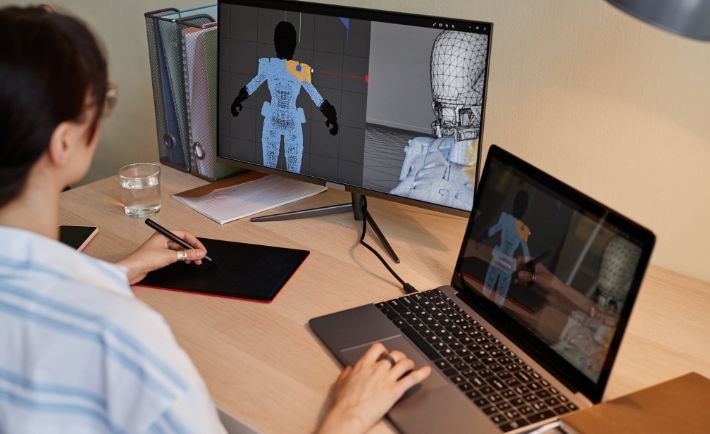
3D modeling has revolutionized the worlds of gaming, film, architecture, and beyond. From hyper-realistic character models in video games to immersive VR experiences, the creation of 3D models continues to shape how we interact with technology. Let’s take a look at different types of 3D models and how they’re made, alongside their many uses and the evolving technology behind them. Whether you’re a gamer, tech enthusiast, or digital artist, this guide will offer a deeper understanding of how these visual masterpieces come to life.
1. Polygonal Models: The Gaming Industry’s Favorite
Polygonal models are arguably the most recognized type of 3D models, especially in gaming. These models stem from polygons, small, flat shapes that connect to form an object. Designers rely on a mesh of these shapes to create forms, like characters, vehicles, or environments.
Tools like Blender, Maya, or 3ds Max make creating polygonal models more efficient, allowing artists to manipulate each polygon’s size, position, and texture. The complexity of these models often determines their visual quality. For example, video games from the early 2000s used low-poly models due to hardware limitations. Today, advanced GPUs enable high-poly models, producing detailed and realistic visuals in modern AAA games.
2. Photogrammetry for Photorealistic Models
When creating lifelike objects or environments, few methods rival the power of photogrammetry. This technique involves capturing multiple photographs of a real-world object or landscape and converting them into a 3D model using specialized software.
Software like RealityCapture or Agisoft Metashape analyzes the data from these images, stitching them together to recreate the object with incredible detail. This process creates hyper-realistic assets for simulation games or architectural visualizations. Fans of visually stunning games like The Last of Us Part II have likely seen photogrammetry in action.
While this method excels at creating photorealistic textures and dimensions, it does require high-resolution images and precise data collection, making it best suited for experienced users in gaming or film production.
3. Procedural Models and Algorithmic Creation
Procedural modeling relies on algorithms and rules to create complex objects. Ideal for vast landscapes or intricate cityscapes, this method generates models using a set of predefined instructions, rather than handcrafting each element individually.
Games like Minecraft or procedural environment generators like Houdini showcase this method brilliantly. Designers define rules, and the software builds the elements, such as sprawling forests or bustling urban areas. Procedural modeling is ideal for applications demanding large-scale environments because it saves time while ensuring variety and detail.
4. Sculpted Models for Organic Designs
Sculpted models are a go-to choice for creating organic shapes, such as realistic humans, animals, or intricate monsters. Unlike polygonal modeling, where forms are crafted piece by piece, sculpting allows digital artists to “mold” objects as though they’re working with clay.
Programs like ZBrush or Blender Sculpt Mode offer tools to push, pull, and smooth designs until a believable creation emerges. This technique is popular for character design in films and video games, delivering lifelike proportions and expressions. The level of detail achieved through sculpting is unparalleled, though it demands significant skill and practice to master.
5. CAD Models for Precision and Industry Applications
CAD (Computer-Aided Design) models cater to industries like engineering, manufacturing, and architecture, where precision and scalability are essential. These highly detailed models assist with the design of everything from buildings to machinery.
CAD software such as AutoCAD or SolidWorks gives engineers and architects the power to visualize and test designs before production begins. The models can also be exported for 3D printing or virtual testing, ensuring functionality and accuracy. Unlike the artistic focus of polygonal or sculpted models, CAD models prioritize functional precision and structural integrity.
The Many Applications of 3D Models
Beyond just gaming and entertainment, 3D models serve countless purposes. Architects use them to showcase building designs to clients, offering virtual walkthroughs long before construction begins. Scientists analyze complex natural phenomena by visualizing data in 3D. The medical field leverages 3D modeling to create surgical guides or prosthetics tailored specifically to a patient’s needs.
Gaming remains a critical driver of innovation in 3D modeling, pushing the boundaries of realism and interactivity, but industries like education and research are tapping into this technology as well.
How Technology Has Transformed 3D Modeling
Advancements in hardware and software have redefined how 3D models are created. GPUs now render models faster than ever, and machine learning is starting to enter the picture, automating tasks like texture generation. Cloud-based platforms allow collaborative modeling, where designers across the globe can work on the same project seamlessly.
Even the accessibility of 3D modeling tools has evolved. Open-source software like Blender provides powerful features at no cost, empowering hobbyists and professionals alike. It’s worth noting that there are differences between 3D modeling and 3D scanning, but both can play a role in the models you’re familiar with. Together, these tools and advancements ensure the future of 3D modeling will be brighter and more accessible than ever before.
Immersive 3D Models in Virtual Reality
3D models also play a pivotal role in virtual reality, and virtual reality continues to play a pivotal role in the evolution of 3D models. In order to immerse users in highly detailed environments, VR relies on precise and interactive model designs. Whether through games, training programs, or educational simulations, VR applications blend real-time rendering with 3D assets to deliver unparalleled experiences.
Programs like Unreal Engine and Unity allow developers to create customized VR worlds, with models that respond to player interaction. The success of VR title Half-Life Alyx underscores how deeply engaging these immersive environments can be when powered by high-quality models and cutting-edge tech.
Crafting Reality in the Digital World
Exploring the different types of 3D models and how they’re made highlights the intersection of creativity and technology. From photogrammetry’s realistic representations to the algorithm-driven charm of procedural models, 3D modeling is diverse and exciting. Whether in gaming, VR, or even medicine, each technique pushes the boundaries of possibility, transforming the way we experience the world. No matter your level of expertise, the tools and opportunities in 3D modeling have never been more accessible.