Choosing between DTF and screen printing can make or break your custom apparel project. Both methods produce stunning results, but they excel in completely different scenarios. DTF printing offers incredible versatility and works beautifully for small batches, while screen printing delivers unmatched durability and cost-effectiveness for large orders.
Understanding these two popular printing techniques will help you make the right choice for your specific needs. The decision affects everything from the quality of your final product to your budget and timeline. Let’s explore the differences between DTF and screen printing, and tips to help you choose the right method.
What Is DTF Printing?
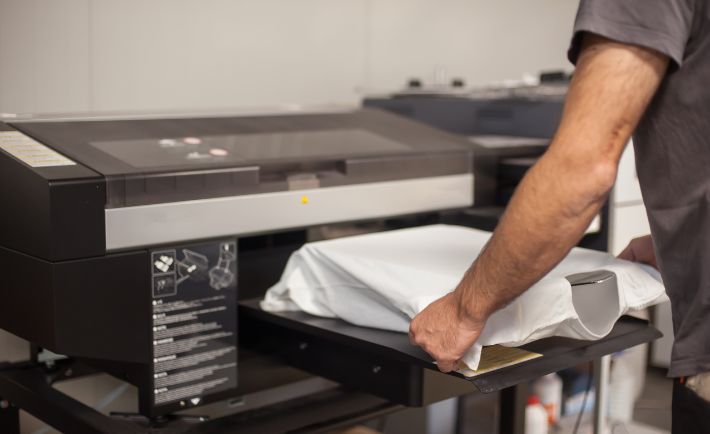
Direct-to-film printing transfers designs from a special film directly onto fabric using heat and pressure. The process starts with printing your design onto a PET film using specialized DTF inks. Next, you apply hot melt adhesive powder to the wet ink, cure it with heat, and then transfer the design to your garment using a heat press.
DTF printing shines when you need flexibility and variety. This method handles complex designs with multiple colors effortlessly, making it perfect for detailed artwork, photographs, and intricate patterns. You can print on virtually any fabric type, from cotton and polyester to blends and even leather or canvas.
Advantages
The primary advantages of DTF printing include its ability to produce vibrant colors, handle fine details, and work equally well on dark and light fabrics. You don’t need to create separate screens for different colors, which saves time and money on setup. Small-batch printing becomes economically viable because it avoids the high setup costs associated with other methods.
Disadvantages
However, DTF printing does have some drawbacks. The prints may not last quite as long as screen-printed designs, especially with frequent washing. The hand feel can be slightly thicker than other methods, though modern DTF techniques have significantly improved this aspect. Additionally, you need specialized equipment and supplies, which requires an initial investment if you’re setting up your operation.
What Is Screen Printing?
Screen printing forces ink through a mesh screen onto fabric, creating bold and durable prints. Each color in your design requires a separate screen, which technicians create by coating mesh screens with photo emulsion and exposing them to light through your design stencil. The process removes unexposed emulsion, leaving open areas where ink can pass through.
During printing, operators place the screen on top of the garment and use a squeegee to push ink through the open mesh areas of the screen. This process creates a thick layer of ink that bonds strongly with the fabric fibers. The result is a vibrant, long-lasting print that can withstand hundreds of wash cycles without significant fading or cracking.
Advantages
Screen printing excels at producing consistent results across large quantities. Once you set up the screens, you can print hundreds or thousands of identical items quickly and efficiently. The method works particularly well for designs with solid colors, bold graphics, and text. You can achieve special effects, such as metallic inks, glow-in-the-dark prints, and textured finishes, that other methods cannot replicate.
The durability of screen printing makes it the gold standard for promotional items, uniforms, and merchandise that sees heavy use. The ink becomes an integral part of the fabric, rather than sitting on top of it, creating prints that retain their appearance over time.
Disadvantages
Screen printing’s main limitation lies in its setup requirements. Each color needs a separate screen, making complex, multi-colored designs expensive and time-consuming to set up. Small orders become cost-prohibitive because the setup costs remain the same regardless of the quantity printed. Color matching can be challenging, and making changes to the design after setup proves difficult and expensive.
DTF vs. Screen Printing: Key Differences
Print quality varies significantly between these methods depending on your design type. DTF printing excels at reproducing photographic images, gradients, and designs with a wide range of colors. The digital process captures fine details and smooth color transitions that screen printing cannot match. Screen printing produces bolder, more vibrant solid colors with a professional finish that many customers prefer for logos and simple graphics.
Cost structures differ dramatically between the two methods. DTF printing costs remain relatively consistent per piece regardless of quantity, making it ideal for small orders. Screen printing requires substantial setup costs, but it becomes more economical as quantities increase. The break-even point typically occurs around 50 to 100 pieces, depending on design complexity.
Durability strongly favors screen printing for long-term wear. Screen-printed designs can last for years with proper care, maintaining their color and integrity through countless wash cycles. DTF prints offer good durability but may show wear sooner, especially on frequently washed items or those exposed to harsh conditions.
Versatility gives DTF printing a clear advantage. You can print on almost any fabric type and color without additional setup. Screen printing works best on cotton and cotton blends, though specialized inks can handle other materials. Dark garments require special techniques in screen printing, while DTF handles them as easily as light-colored items.
When To Choose DTF Printing
DTF printing is ideal for projects that require flexibility and variety. Small businesses creating custom merchandise, artists selling limited edition designs, and anyone needing quick turnaround times will find DTF printing invaluable. The method handles one-off custom pieces economically, making it perfect for personalized gifts or prototype development.
Complex designs with multiple colors, photographic elements, or fine details favor DTF printing. If your design includes gradients, shadows, or more than four colors, DTF will reproduce it more accurately and cost-effectively than screen printing. The method also works well when you need to print the same design on different fabric types or colors.
When you get the right DTF printing supplies, you can achieve professional results that rival traditional printing methods. The key lies in using quality films, inks, and adhesive powders that work together to create durable, vibrant prints.
Event merchandise, including custom team jerseys with names and numbers, as well as fashion items with intricate patterns, all benefit from the versatility of DTF printing. The method allows you to offer customers more options without significantly increasing your inventory or setup costs.
When To Choose Screen Printing
Screen printing dominates large-scale production runs where consistency and durability are most important. Corporate uniforms, promotional t-shirts for events, and merchandise for retail sale benefit from screen printing’s professional finish and long-lasting quality. The method becomes increasingly cost-effective as order quantities grow.
Simple designs with solid colors work perfectly for screen printing. Logos, text-based designs, and graphics with clear, distinct colors will look crisp and professional. The thick ink deposit creates vibrant colors that stand out vividly against the fabric, especially on darker garments.
Athletic wear, work uniforms, and items that face heavy use should use screen printing for maximum durability. The prints withstand industrial washing, frequent wear, and harsh conditions better than most alternatives. Schools, sports teams, and businesses ordering uniforms will appreciate the long-term value screen printing provides.
Specialty ink effects, such as metallic finishes, puff printing, or discharge inks, give screen printing unique capabilities. These effects create distinctive looks that you can’t achieve through digital printing methods.
Make the Right Choice for Your Project
Your decision between DTF and screen printing should align with your specific project requirements. Consider your quantity needs, design complexity, budget constraints, and durability expectations. DTF printing offers unmatched flexibility for small runs and complex designs, while screen printing delivers superior durability and cost-effectiveness for large orders with simple graphics. Neither method is universally superior—they excel in different situations. Evaluate your priorities carefully, and don’t hesitate to consult with printing professionals who can assess your specific needs. The right choice will deliver the quality, durability, and value your project deserves.