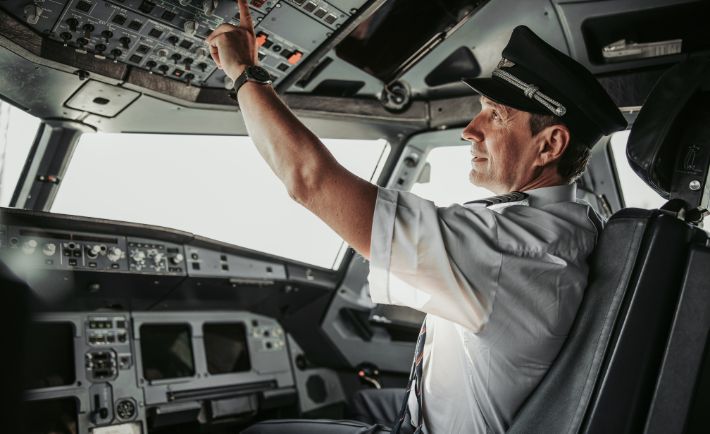
The aviation industry continues to experience unprecedented growth, creating exciting opportunities for aspiring pilots worldwide. Airlines face pilot shortages, corporate aviation expands, and flight training programs welcome students from diverse backgrounds. Whether you dream of commanding commercial airliners or flying private aircraft, becoming a pilot requires specific skills, dedication, and strategic planning.
Many people wonder if they possess the right qualities to pursue aviation careers. The good news? Pilots come from various educational and professional backgrounds, and flight schools actively recruit candidates who demonstrate the necessary aptitude and commitment. Success depends less on your starting point and more on your willingness to develop essential skills and complete rigorous training.
This comprehensive guide explores the various skills you need, outlines the licensing process, and provides practical advice for launching your aviation career. You’ll discover what separates successful pilot candidates from those who struggle and learn how to position yourself for success in this rewarding field. Use these tips to become a pilot to find out if you have what it takes.
Essential Skills Every Pilot Must Develop
Spatial Awareness and Navigation Abilities
Pilots must visualize aircraft position in three-dimensional space while managing complex flight patterns. Spatial orientation skills help you understand your aircraft’s relationship to terrain, weather systems, and other aircraft. Strong spatial reasoning abilities enable pilots to interpret instrument readings, navigate challenging airspace, and maintain situational awareness during critical flight phases.
You can develop these skills through flight simulation software, spatial reasoning practice tests, and hands-on experience with navigation tools. Many successful pilots recommend starting with basic flight simulator programs to build foundational spatial awareness before beginning formal training.
Mathematical Proficiency and Logical Thinking
Aviation relies heavily on precise calculations and logical decision-making. Pilots perform mental arithmetic for fuel calculations, weight and balance computations, and navigation planning. You’ll need strong mathematical skills to:
- Calculate fuel requirements for different flight scenarios
- Determine aircraft performance limitations
- Convert between measurement systems
- Analyze weather data and make informed decisions
- Plan optimal flight routes considering factors like wind and terrain
Logic skills prove equally important when troubleshooting aircraft systems, responding to emergencies, and making split-second decisions under pressure.
Communication Excellence
Clear, professional communication forms the backbone of safe aviation operations. Pilots interact with air traffic controllers, ground personnel, passengers, and crew members using precise aviation terminology. Strong communication skills help you convey critical information quickly and accurately, especially during high-stress situations.
Effective pilot communication requires active listening, concise speech, and the ability to ask clarifying questions when needed. You’ll learn standardized phraseology during training, but natural communication abilities provide a significant advantage throughout your career.
Critical Steps for Obtaining Your Pilot License
Research Training Programs and Flight Schools
Choosing the right flight school dramatically affects your training experience and career prospects. Research programs carefully, considering factors like instructor quality, aircraft fleet condition, training methodology, and job placement assistance. Visit multiple schools, speak with current students and recent graduates, and compare training costs and timelines.
Look for schools with strong safety records, modern training aircraft, and experienced instructors who prioritize student success. Many programs offer discovery flights that let you experience pilot training firsthand before committing to a full program.
Complete Medical Certification Requirements
All pilots must obtain medical certificates from Aviation Medical Examiners (AMEs) before beginning flight training. The Federal Aviation Administration requires different medical standards depending on the type of pilot license you pursue. First-class medical certificates apply to airline transport pilots, second-class for commercial pilots, and third-class for private pilots.
Schedule your medical examination early in the training process to identify and address potential issues. Common disqualifying conditions include certain cardiovascular problems, mental health conditions, and substance abuse history. However, you can resolve many conditions that initially seem disqualifying through the special issuance process with proper medical documentation.
Master Written Examinations and Flight Hour Requirements
Pilot certification involves written knowledge tests and practical flight examinations. Written exams cover aerodynamics, weather theory, navigation, Federal Aviation Regulations, and aircraft systems. Most students spend two to three months preparing for written exams using approved study materials and practice tests.
Flight hour requirements vary by license type:
- Private Pilot License: 40 hours minimum flight time
- Commercial Pilot License: 250 hours minimum flight time
- Airline Transport Pilot License: 1,500 hours minimum flight time
Quality training matters more than simply accumulating hours. Focus on developing solid fundamental skills during early training phases, as these form the foundation for advanced flying techniques.
Transitioning Into Aviation From Other Industries
Many successful pilots begin their aviation careers after working in completely different fields. Switching career paths to the aviation industry offers unique advantages, as diverse professional experiences often translate into valuable pilot skills. Former engineers bring analytical thinking abilities, teachers excel at communication, and military personnel contribute discipline and decision-making experience.
Career changers should research available transition programs designed specifically for professionals entering aviation. Some airlines and flight schools offer accelerated training paths for career switchers, recognizing the value of professional experience and maturity.
Financial planning becomes crucial when transitioning careers, as pilot training requires significant investment. Research financing options including federal student loans, private training loans, and employer sponsorship programs. Some companies offer tuition reimbursement for employees who commit to working for specified periods after certification.
Building Professional Networks
Aviation relies heavily on professional relationships and industry connections. Attend aviation career fairs, join pilot associations, and participate in local flying clubs to meet industry professionals. Many career opportunities arise through networking rather than traditional job applications.
Consider joining organizations like the Aircraft Owners and Pilots Association, Women in Aviation International, or the National Association of Flight Instructors. These groups provide valuable resources, mentorship opportunities, and industry insights that accelerate career development.
Your Flight Path Starts Now
Becoming a pilot requires dedication, financial investment, and systematic skill development, but the rewards justify the effort. The aviation industry offers diverse career paths, competitive compensation, and the unique satisfaction of mastering one of humanity’s most challenging technical skills. Success begins with honest self-assessment of your skills and commitment level. If you possess strong mathematical abilities, excel at communication, and demonstrate spatial awareness, you likely have what it takes to become a pilot. Remember that specific aviation skills develop through proper training—focus on building the underlying abilities that support pilot performance. Wheels up!