
Generative AI tools are changing how creators move from a rough idea to merchandise that people can wear, display and share. A short written prompt can now produce visual concepts in seconds, giving independent artists and online creators a faster way to explore designs before spending money on production. As generative AI fuels physical product design, the most useful applications combine rapid experimentation with human judgment. Creators still need to refine the concept, check the details and make sure the final product fits their audience.
The Rise of Creative Text Prompts
A text prompt works like a compact creative brief. It describes the subject, mood, colors, composition and visual style that an image generator should attempt. “A cheerful robot tending a rooftop garden in a flat retro style,” for example, gives the system far more direction than “robot shirt.”
Effective prompts usually begin with the main subject, followed by two or three clear visual instructions. Creators can then revise one element at a time, such as the color palette or viewing angle, to see which change improves the result. Keeping a prompt log also helps reproduce successful ideas.
Originality still requires attention. The US Copyright Office’s guidance on copyright and artificial intelligence explains how human authorship affects copyright protection for AI-assisted work. Keeping records of personal edits and creative decisions can therefore be a sensible habit.
From Text Prompts to Physical Products
Once a concept looks promising, the next task is seeing how it works on an actual item. A detailed illustration may look impressive on a monitor but lose clarity when printed at chest size. Fine lines, tiny lettering and low-contrast colors can all create problems.
Tools that combine generation with product previews shorten this testing cycle. Someone developing apparel for a personal idea or event can use generate a custom shirt to turn a written concept into original artwork, explore visual styles, and preview the design on a shirt before ordering. This makes it easier to assess the overall appearance and spot potential design issues early.
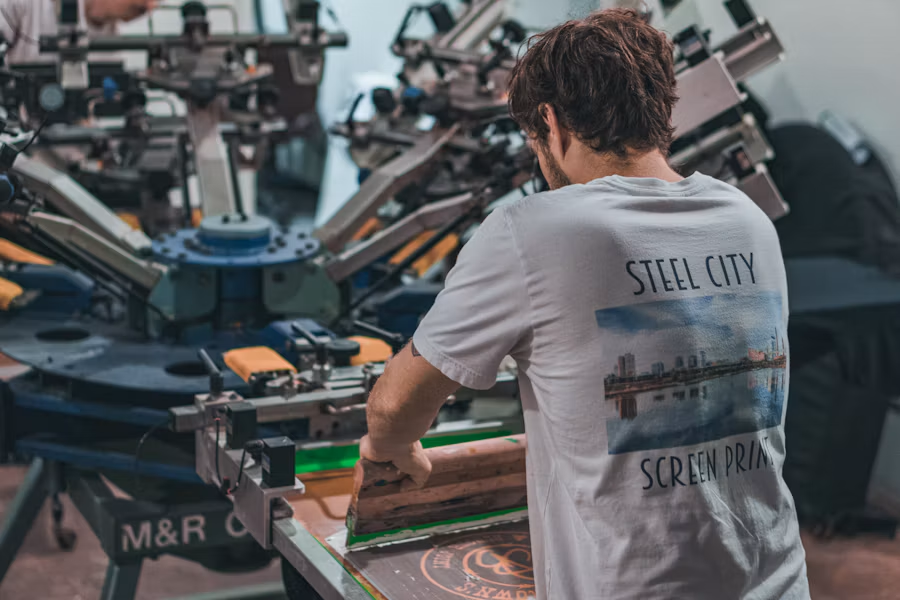
The production method also affects the finished result. Understanding how to choose the right printing method can help creators compare options such as DTF and screen printing based on design complexity, order quantity and budget.
Before ordering, inspect the preview at several sizes. Check spelling, confirm that important details remain readable and leave enough space around the artwork. If the design only works when enlarged, simplify it before production.
Eliminating the Inventory Bottleneck
Traditional merchandise launches often require creators to estimate demand before anyone has placed an order. Ordering too many units ties up cash and storage space, while ordering too few can delay fulfillment. Digital design workflows make it easier to validate an idea before committing to a larger run.
A creator might prepare three concepts, share realistic previews with a small audience and track which one receives meaningful interest. Preorders, email sign-ups and limited test runs provide stronger evidence than casual likes. Even 20 confirmed orders can reveal more than hundreds of quick reactions.
Keep the first release focused. One design with two color choices is easier to manage than a collection with many combinations. Record production cost, packaging cost and expected returns so the selling price reflects the full expense of delivering each item.
Creative Independence for Solo Artists
Solo artists often handle concept development, promotion and customer communication themselves. Generative tools can reduce the time spent creating early drafts, leaving more room for decisions that need a personal point of view. The artist remains responsible for selecting the concept, correcting odd details and shaping a consistent visual identity.
A useful workflow sets boundaries. Define the audience and message first, generate several variations, then edit the strongest option in familiar design software. Test the result with a few people who understand the intended audience, paying close attention to comments about readability and tone.
The strongest merchandise will still feel connected to its creator. A recognizable color system, recurring character or carefully chosen phrase can turn an AI-assisted draft into something distinctive. That human editing is what gives a printed idea enough personality to outlast the initial novelty.