
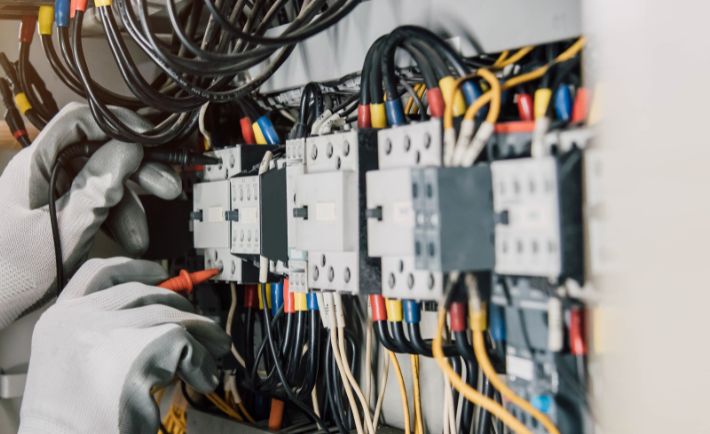
Electrical relays serve as the workhorses of countless industrial systems, automotive applications, and household devices. These electromagnetic switches control high-power circuits through low-power signals, making them indispensable components across multiple industries. When relays fail unexpectedly, they can bring entire systems to a halt, resulting in costly downtime and potential safety hazards.
Understanding the most common failure modes helps engineers and technicians identify problems early and implement effective solutions. This knowledge proves invaluable whether you’re maintaining manufacturing equipment, troubleshooting automotive electrical systems, or ensuring reliable operation of building automation controls. We’re discussing a few common fail points for electrical relays, highlighting how you can mitigate such issues with effective actions.
Contact Wear and Contamination
Contact degradation represents the most frequent cause of relay failure. Every time a relay operates, its contacts make and break electrical connections, creating small arcs that gradually erode the contact surfaces. This erosion becomes more pronounced with higher current loads and frequent switching cycles.
Arcing occurs during contact closure and opening, but the severity depends on the circuit characteristics. Inductive loads, such as motors and solenoids, generate particularly damaging back-EMF spikes when power disconnects. These voltage spikes can reach several times the normal operating voltage, creating intense arcs that pit and burn the contact surfaces.
Contamination compounds the contact wear problem significantly. Dust, moisture, and chemical vapors can accumulate on contact surfaces, creating resistance paths that generate heat and promote corrosion. Oil mist from manufacturing processes, salt spray in marine environments, and sulfur compounds in industrial atmospheres all contribute to contact degradation.
The contact material itself influences failure patterns. Silver contacts excel in low-resistance applications but tarnish easily in sulfur-rich environments. Gold-plated contacts resist corrosion but wear quickly under high-current conditions. Tungsten contacts handle high currents well but suffer from high contact resistance when lightly loaded.
Coil Failure Mechanisms
Relay coils fail through several distinct mechanisms, each producing different symptoms and requiring specific diagnostic approaches. Thermal stress ranks among the most common causes, occurring when excessive current heats the coil windings beyond their insulation rating.
Overvoltage conditions stress coil insulation and cause immediate failure. When supply voltage exceeds the relay’s rated voltage by more than 10 percent, the increased current generates excessive heat and magnetic forces that damage the winding structure. Voltage spikes from switching transients or lightning strikes can instantly destroy coil insulation.
Undervoltage presents a different challenge. When coil voltage drops below the pickup threshold, the armature may chatter between open and closed positions. This chattering creates mechanical stress and arcing that accelerates wear throughout the relay mechanism.
Environmental factors significantly affect coil longevity. High ambient temperatures reduce the thermal margin between operating temperature and insulation failure. Humidity can penetrate coil housings, causing insulation resistance to drop and promoting corrosion of internal conductors.
Mechanical Component Failures
Spring mechanisms within relays experience fatigue stress with every operation cycle. Contact springs must maintain precise force levels to ensure reliable connection while allowing smooth operation. Metal fatigue gradually reduces spring tension, leading to unreliable contact pressure and eventual failure.
Pivot points and bearing surfaces wear through friction and contamination. Dust particles act as abrasives, gradually increasing the force required for armature movement. Corrosion at these interfaces can cause binding or erratic operation, particularly in humid environments.
Armature alignment problems develop when mechanical components shift due to shock, vibration, or thermal cycling. Misaligned armatures may fail to close contacts completely or may bind during operation. These problems often manifest intermittently, making diagnosis challenging.
Environmental Stress Factors
Temperature extremes challenge relay operation in multiple ways. High temperatures accelerate chemical degradation of insulation materials and lubricants while increasing resistance in electrical connections. Low temperatures can cause materials to become brittle and may prevent proper contact closure due to increased viscosity of lubricants.
Thermal cycling creates expansion and contraction stress throughout the relay structure. Different materials expand at different rates, creating mechanical stress at interfaces and connection points. Solder joints are particularly vulnerable to thermal cycling fatigue.
Humidity affects electrical and mechanical components. Moisture can cause insulation resistance to drop below safe levels and promote corrosion of metal surfaces. Condensation within the relay housing creates particularly severe problems, as water droplets bridge contacts or create conductive paths between isolated circuits.
Vibration from machinery, transportation, or seismic activity can cause several failure modes:
- Mechanical fatigue of springs and structural components.
- Loosening of threaded connections and terminals.
- Fretting corrosion at contact interfaces.
- Premature contact wear due to bouncing.
- Structural damage to coil windings.
Chemical contamination poses ongoing threats in industrial environments. Acidic vapors attack metal components, while alkaline conditions can degrade organic insulation materials. Hydrocarbon vapors may create conductive films on insulator surfaces.
Diagnostic and Maintenance Strategies
Effective relay maintenance begins with understanding normal operating parameters. Coil resistance measurements provide baseline data for detecting winding deterioration. Contact resistance testing reveals developing problems before complete failure occurs.
When testing and troubleshooting electrical relays, systematic approaches yield better results than random component swapping. Begin with visual inspection for obvious damage, contamination, or overheating signs. Check all connections for tightness and corrosion.
Functional testing under actual load conditions often reveals problems that bench testing misses. Intermittent failures frequently occur only under specific temperature, vibration, or electrical stress conditions that normal testing doesn’t replicate.
Prevention Through Proper Application
Selecting relays with appropriate contact ratings prevents many premature failures. Contacts rated for the actual load current, not just the steady-state current, ensure adequate safety margins during switching transients.
Environmental protection through proper enclosure selection shields relays from contamination and moisture. Sealed relays cost more initially but provide longer service life in harsh conditions.
Circuit protection devices, such as snubbers, surge suppressors, and arc quenchers, reduce the electrical stress on relay contacts. These devices are particularly important with inductive loads that generate switching transients.
Extending Relay Service Life
Regular maintenance schedules based on operating cycles rather than calendar time provide more accurate reliability predictions. High-cycle applications may require monthly inspection, while low-duty applications might need only annual attention.
Implementing condition monitoring systems can identify developing problems before they cause system failures. Current signature analysis, vibration monitoring, and thermal imaging can detect relay problems early in their development. Proper installation practices significantly influence relay longevity. Adequate ventilation prevents thermal stress, secure mounting reduces vibration effects, and proper wire routing minimizes electromagnetic interference. If you experience one of these common fail points with electrical relays, don’t hesitate to troubleshoot and retry.